It sounds paradoxical coming from a museum director, yet I think that a sense of exhaustion lies at the core of the contemporary condition of art. The dynamic reshaping of the sphere of the political is signaling a radical shift in all other areas of culture. Those seeking an immediate influence of art on politics must be frustrated as other, faster outlets serve political action in a way that is much more effective. The temporal slip caused by this difference in speed is crucial here.#art, #politics
In a relatively recent essay, Argentinian novelist Cesar Aira (2018), focused on different types of anachronisms characteristic to the notion of contemporary art. Primarily this genre is timeless: it replaced all the other movements with the persistence of an eternal present. The illusion of the existence of a single line of progress has reached exhaustion. Yet one element characteristic to the modern paradigm survived – the novelty element is still being considered a criterion of value. Modernist aesthetics collides with this suspended temporality, producing a series of misunderstandings. This paradox is in close relation with another – the coexistence of understanding art as object and as process. Museums and the market sustain the object-based element of art, while the shift towards the process is set by the logic of the avantgardes which still is responsible largely for the ethos of art.#art, #Modernity, #process
This is where the figure of an enemy of contemporary art is being produced. Its rise is driven by the inability to align these two modes and to see that the material structure which is presented to the eyes is a product of usually hidden methodologies, which became the focus of artists and critics alike. The destabilisation caused by these contradictions is not productive and it results in a lack of trust in art. Historically, the focus on the processuality of art-making is connected with the opening of art into non-professional practices and the Beuysian „anyone”. Aira points to the fact that the „enemy” is a figure specific only to the field of contemporary arts. This lack of trust is at the core of both the appeal and repulsion felt towards museums of contemporary art.#art, #othering
Art institutions are mostly helpless when it comes to any attempt at a race with the new vernaculars. Museums are no longer guarantors of universal narratives. But they remain important infrastructures that sustain distance and solidarity. This shift is connected to a broader transformation of the cultural field in which through ‘social’ media the production of new vernaculars has become radically decentralised, the outlets of distribution are high throughput and they are enforced by the power of capital. New screens are taking over every last moment of rest for the perceptual apparatus and feed it with addictive attention slop.#social media, #museum
Museums cannot be taken as an alternative to these ever-present images. There could be no balance between them. Yet we still dream of museums that are politically and socially relevant in a reality that is operating on a different pace. But the museum’s purpose is grounded in another relation to distance – the immediate contact with art. That experience is crucial because it works with other modes of attention. The temporality of an artwork is founded on the fact that the visitor needs to cover the distance. These images are not delivered, they wait in the infrastructures of delay. It is not an aesthetic preference, but rather a political gesture. By slowing down the circulation of images and insisting on embodied presence, museums interrupt the automatic conversion of visual material into affective response.#social media, #museum, #delay
Museums create situations in which seeing becomes a form of work rather than a passive reception. This shift from representation to practice is crucial. It consolidates the rift caused by the object-practice collision. The period of time between creation and viewing opens a spatial composition that allows objects from different places and historical moments, share time and space and become contemporary to each other. That suspension is the key for the activation of other qualities of art.#reception, #museum
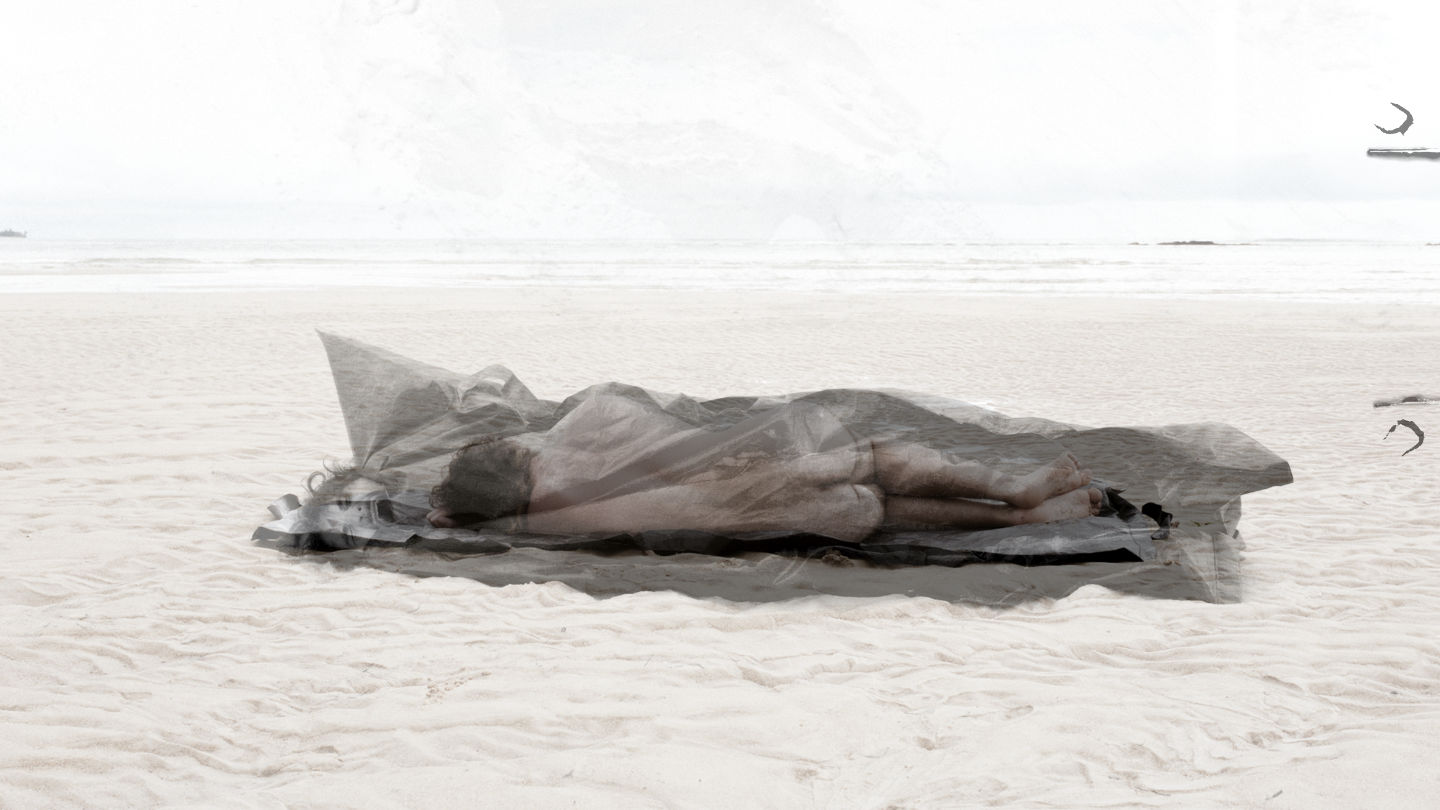
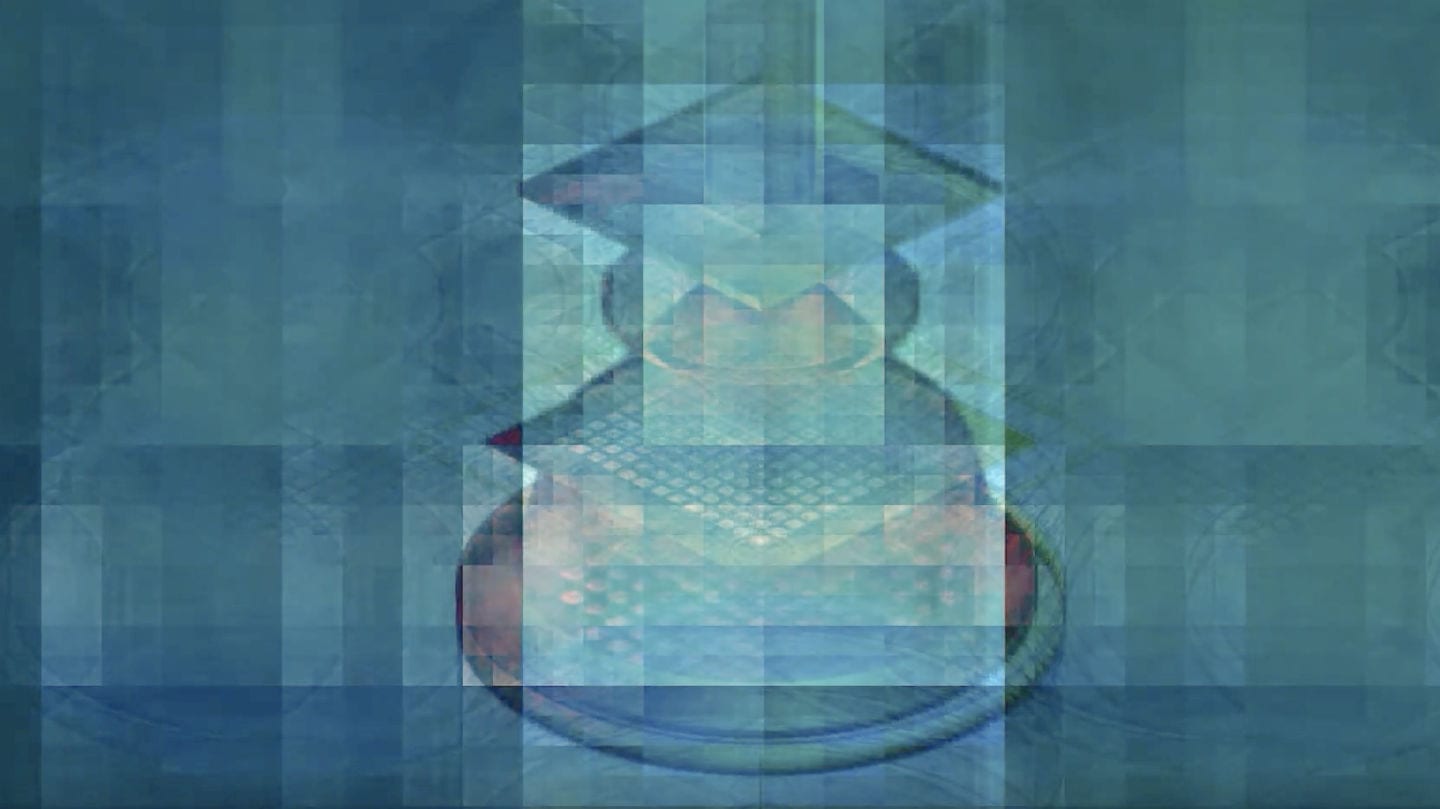
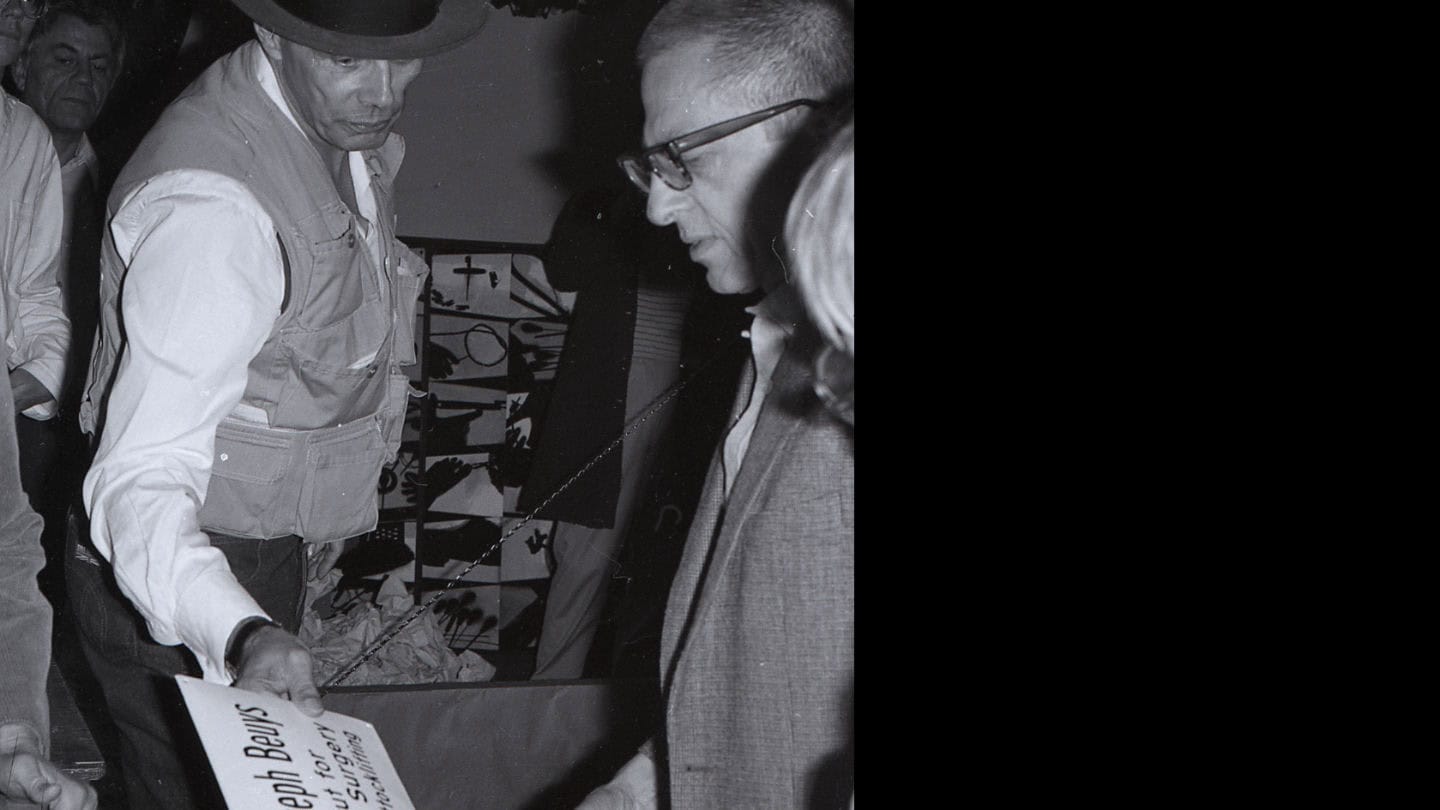
When Joseph Beuys organised the Polentransport in 1981, he did not produce a finished artwork (Beuys 1993, Fig. 1). What travelled from Düsseldorf to Muzeum Sztuki in Łódź was a container filled with heterogeneous gestures and unresolved meanings. Seen from a more materialist perspective this was a simple donation of artworks to a museum. Beuys was referencing another event, the founding of the collection of „a.r.” group, which was presented to the public fifty years earlier.#Joseph Beuys, #collection
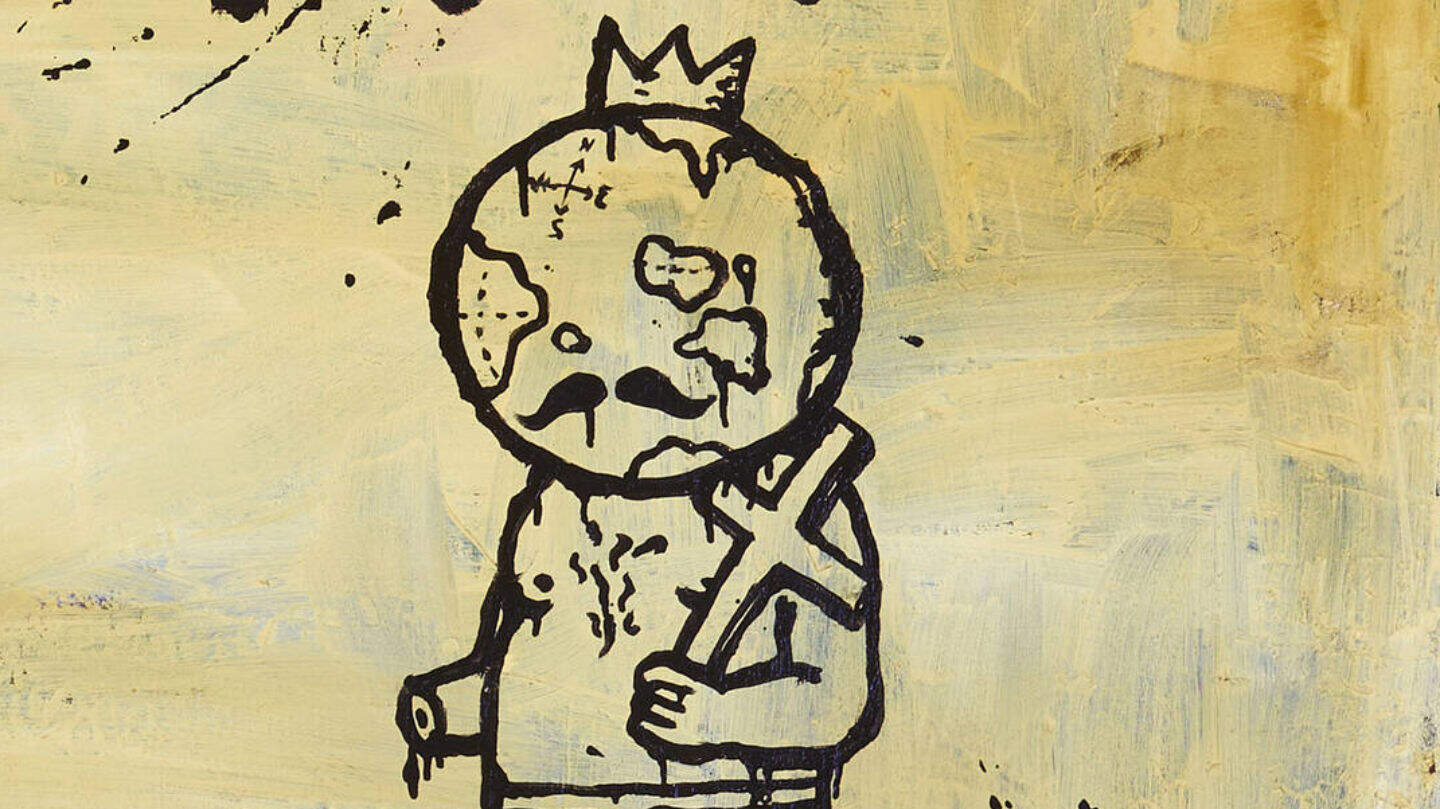
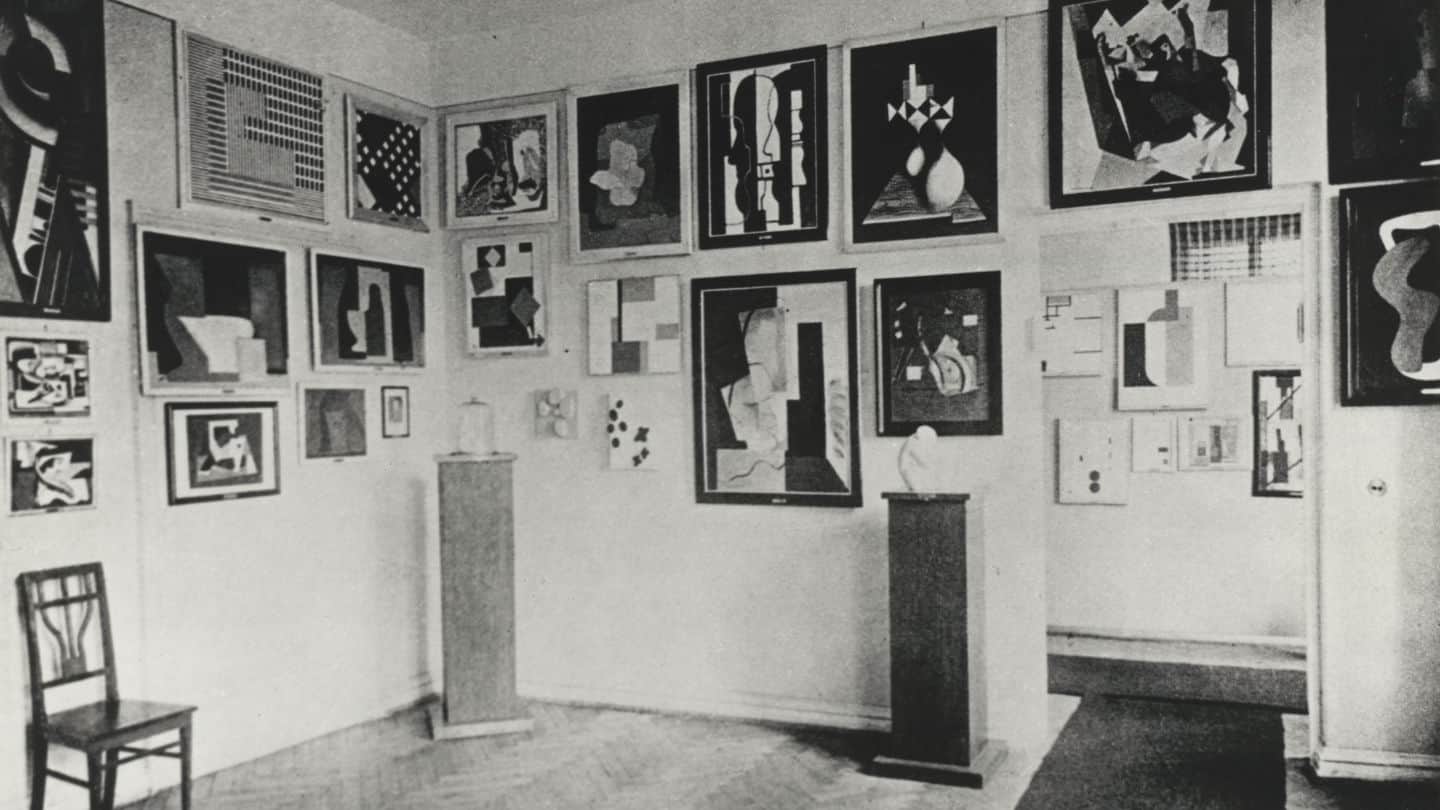
Muzeum Sztuki is an institution whose identity was founded at the time when modern meant contemporary. „a.r.” group founded in late 1920s by Władysław Strzemiński, Katarzyna Kobro, Henryk Stażewski, Jan Brzękowski and Julian Przyboś operated as agents of a new kind of museum, of an institution that formed the present to shape the future (Pindera/Suchan 2020, Fig. 2). They relied on the solidarity of artists and their voluntary donations that allowed them to lay ground for an ethos, which became the basis of Muzeum Sztuki’s profile. The practice of voluntary donations that founded the collection of the a.r. group did not disappear with the historical avant-garde. It remains a structural element of the institution.#„a.r.” group, #collection
The title given to the first presentation in 1931, Exhibition of International Collection of Modern Art of the „a.r.” group emphasised internationalism and the present. Strzemiński saw it as an instrument in a process of emancipation that is based on visual consciousness: the eyes, as part of the brain are able to gain skills in differentiating and hence serve as critical tools. That capacity is something that a museum and its collection can awaken and nourish. This kinaesthetic knowledge is gained directly through seeing.#„a.r.” group
Polentransport became then another attempt at a renewal of that potential fifty years after the first act. Beuys treated it as a bridge towards redemption, a donation to a country where some of the most atrocious moments of WWII took place. This was a gesture towards the past. But there was a care for the future in the fact that this container was set to support the Solidarity movement as force not far from his ideal of direct democracy. It was then both an offering of redemption and toolbox of solutions for the future, that could be activated if needed. Seen from today’s perspective, Polentransport can be read as a prototype of artistic practice that operates as a system of early warning. It sensed fractures in the political order of Europe long before they became fully articulated in institutional discourse.#Joseph Beuys, #democracy
Artworks often register changes at the level of affect and embodied experience before these signs become legible within political or institutional frameworks. This understanding of artistic practice aligns closely with Richard Demarco’s long-standing view of art as a form of cultural sensorium. Since mid-1960s Demarco, a Scottish curator, made attempts at bridging the art worlds divided by the Iron Curtain. His work with artists from Eastern Europe was directed towards offering them a space that resonated with their work. For Demarco, art does not serve primarily to illustrate historical processes or to provide symbolic commentary on political events. It operates as a field in which weak signals become perceptible. Demarco uses the notion of ‘early warning systems’ to speak of this capacity of art (Demarco 1978). Do not let the cold war jargon mislead you. It can still prove to be useful to describe the possibilities that current art can offer. If we apply early warning signs to Polentransport we see an apparatus, a set of instruments that could be tuned to different registers and reveal challenges like the impending environmental crisis, problematic relation of art to capital, or even the necessity of universal basic income which Beuys postulated in the 1980s.#art, #early warning system, #Eastern Europe
Another core idea for Muzeum Sztuki becomes essential for setting up of a weak signal amplification apparatus: autonomy. The modernist ideal of autonomy as separation from society is no longer tenable. It was bound to specific historical conditions and often functioned as a mechanism of exclusion. However, abandoning autonomy altogether would leave art defenseless against instrumentalisation. What is needed is a redefinition of autonomy as infrastructural distance. This distance does not imply withdrawal from reality. It is founded in the capacity to resist immediate capture by market logics and political agendas.#early warning system, #art, #autonomy
Strzemiński and Kobro believed that instead of sending artists to factories they should work in museums understood as laboratories of useless forms. These objects can become solutions in the real world but this is not their primary purpose. They are formed in order to alter the perceptual habits. Since they are made to be looked at, that very function is their essence. This is particularly striking when experiencing any of the Spatial Compositions of Kobro. These abstract sculptures are disrupting the distinction between outside and inside. They also work by setting body into motion and make the movement as scored by the spatial-temporal rhythms the basis of the kinaesthetic knowledge. It is based on a dynamism of the somatic.#artist, #artistic research
The museum as the container of these challenging objects is a space for the experiment in forming new conditions for seeing. The weak signals are early percepts of those phenomena that take on the shape of a prototype. Autonomy in this sense guarantees conditions of thought rather than specific outcomes. It allows artistic practices to unfold without being immediately translated into propaganda, entertainment or attention slop. Autonomy creates space for hesitation and ambiguity. In contexts where cultural production is increasingly directed by ideological or economic purposes, such distance becomes critical. Without it, art loses its capacity to function as an early warning system and becomes merely another mechanism for affect.#museum, #ambiguity
My upcoming book Twilight of the Magicians (Muzyczuk 2026) focuses on artistic practices in Poland and Russia from the late Cold War period through the decades following 1989. It examines how artists engaged with reenchantment as a method for destabilising the rational and bureaucratic frameworks that structured modern life. In the late socialist and early post-socialist period the boundaries separating art from politics and media became increasingly porous. This cross-disciplinary practices could not find a place within the weak or non-existent public institutions. Artistic practices couldn’t rely on the protected institutional space that modernism had once provided. This condition can be described as post-autonomy.#Cold War, #post-socialist, #museum
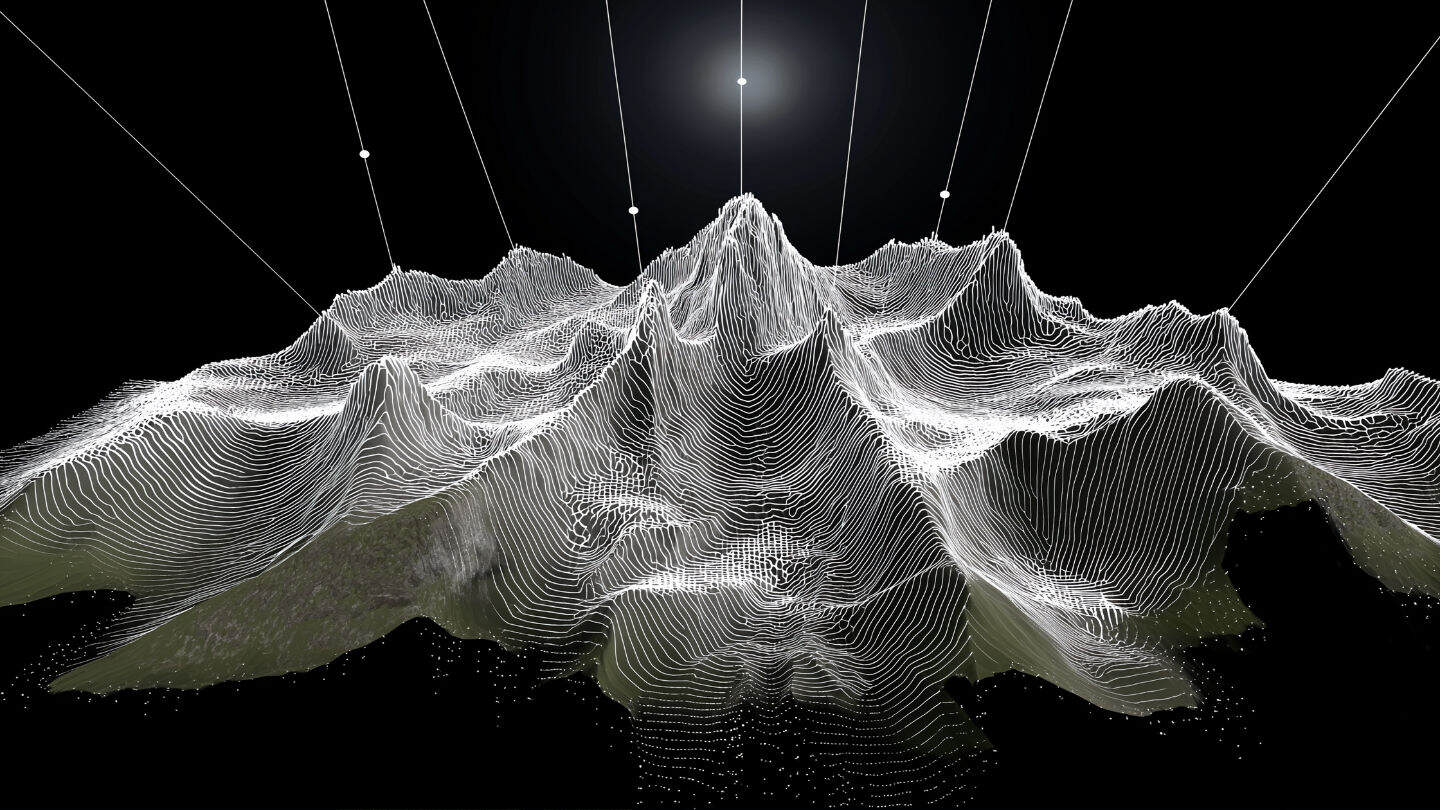
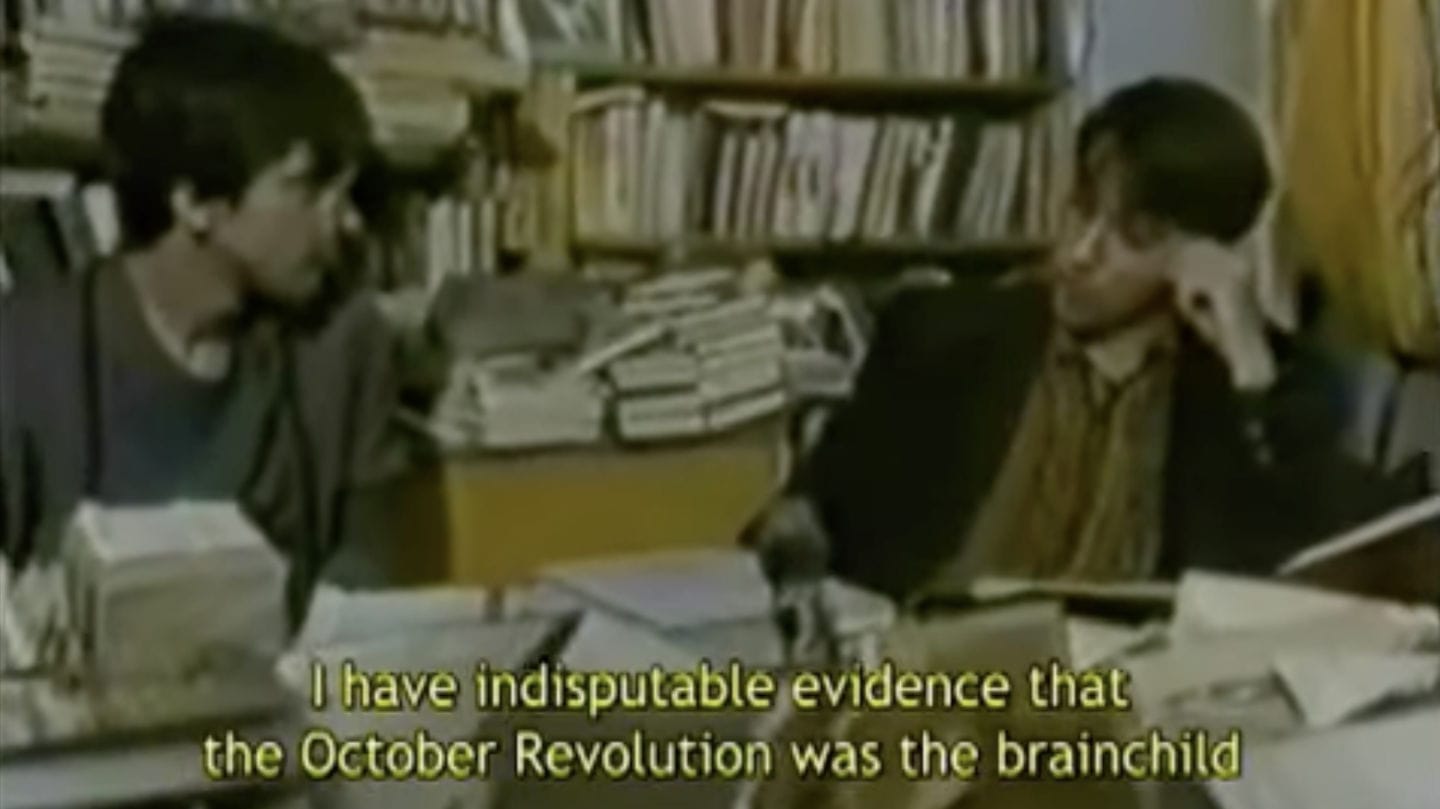
Art continued to experiment with forms of perception and affect, but these attempts were no longer contained within a stable artistic sphere. They travelled through different scenes where their meanings could be transformed. Magic folds time and space and makes distant things close. It works against delay and autonomy. Within artistic contexts, magic allowed artists to test alternative relations between perception and symbolic power. Enchantment appeared as a way of suspending the apparent inevitability of existing political and economic structures. A famous example of this destabilisation was Sergei Kuriochin’s television performance Lenin was a Mushroom, broadcast on Leningrad TV in 1991, which exposed how easily symbolic authority could be manipulated within emerging media environments (Fig. 3). Kuriochin used parody and pseudo-scientific logic to transform a political icon into a mutable symbolic figure. He constructed a narrative where Lenin ate so many psychodelic mushrooms that he became one himself. The iconoclastic message was taken seriously by many viewers and sent ripples across the decaying Soviet Union. The event revealed how techniques of enchantment could migrate from artistic experimentation into mass media, anticipating later forms of political myth-making in post-autonomous cultural environments.#art, #enchantment, #fiction, #post-socialist
Surprisingly, but alarmingly, the same symbolic structures that once served emancipatory purposes within artistic countercultures proved capable of being rearticulated within emerging right-wing political imaginaries. Ritual began to operate as powerful technology of political mobilisation. The transition occurred through a shift in the affective orientation of these practices. Techniques developed to expand perception and to question authority could become a meta-political instrument. Seen from this perspective, enchantment amplifies affect instead of critical distance.#right-wing, #enchantment
Under conditions of post-autonomy this mechanism circulates across artistic and political environments with increasing speed. This is why the question of institutional frameworks becomes so crucial. Without spaces capable of introducing distance and reflection, the energies released by enchantment can easily collapse into belief systems that resist critical examination. The role of the museum, therefore, is not to eliminate enchantment but to contain it within structures that allow it to be slowed down and analysed. It returns to the institution and by the power of distancing and delaying it might rearticulate critical potential.#institutions, #museum
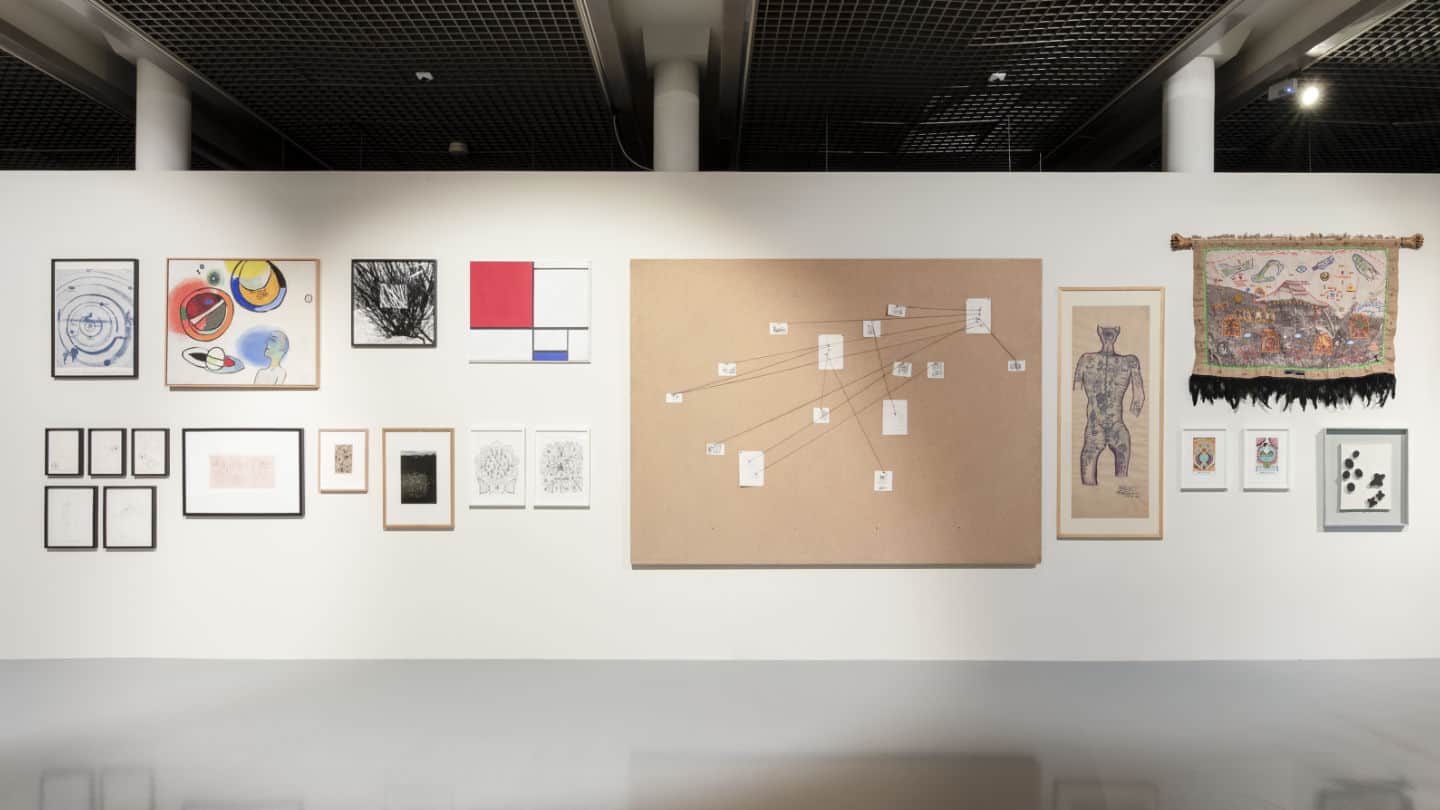
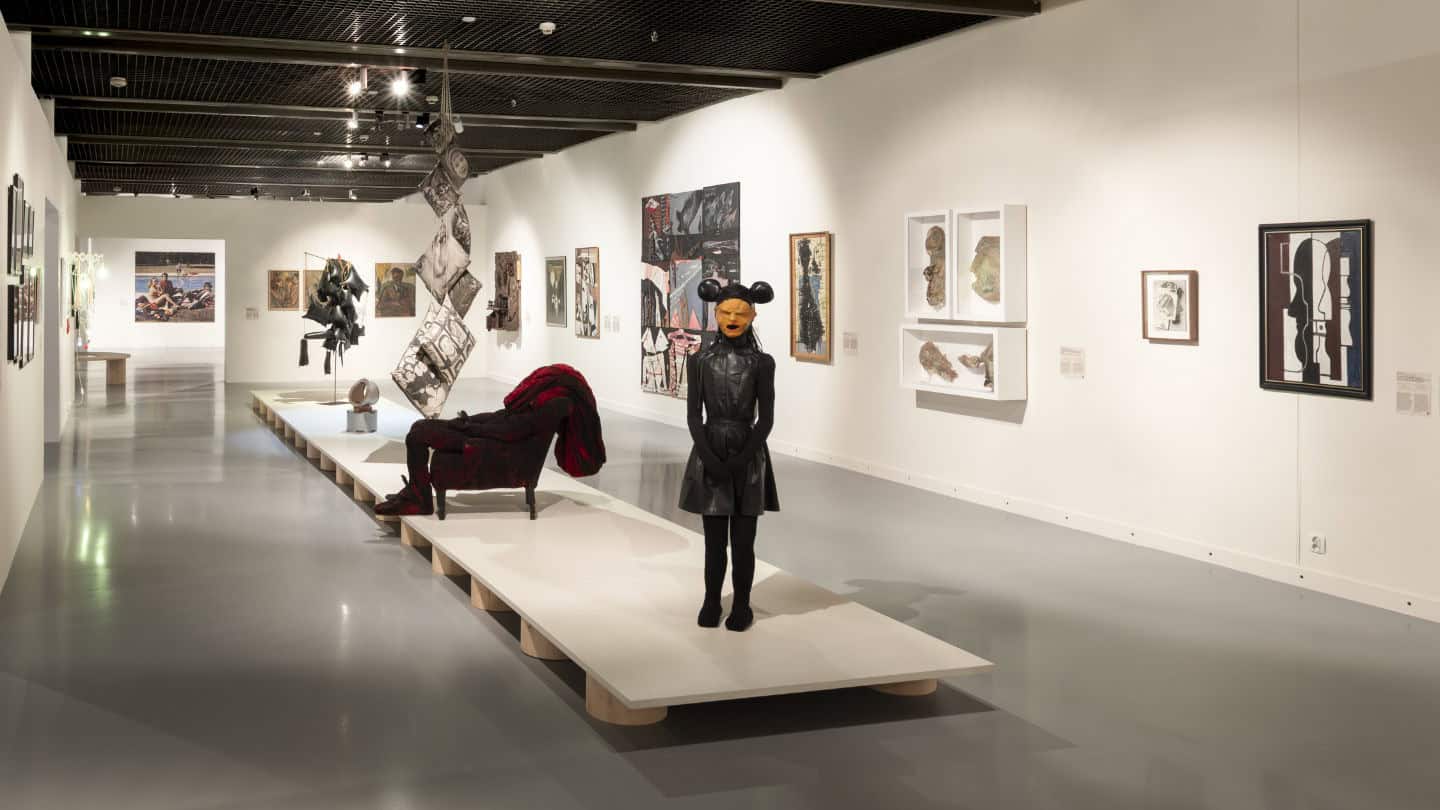
If art can still function as an early warning system, then the question becomes institutional: what kind of museum can sustain such signals? The exhibition Ways of Seeing, the new presentation of the collection at Muzeum Sztuki, was conceived precisely as such a framework. Opened in 2025, it was curated by Jakub Gawkowski, Daniel Muzyczuk, Paweł Polit, Katarzyna Różniak-Szabelska and Franciszek Smoręda (Gawkowski et. al. 2025, Fig 4). Instead of showing artworks as localised objects that illustrate an evolution of forms, the exhibition treats seeing itself as a form of labour. Visitors are asked to recognise that perception is never neutral. It is shaped by habits, technology and ideology. The exhibition attempts to reorganise this perceptual field by slowing down recognition and creating unexpected relations between works from different periods and geographies. The museum is transformed into a laboratory in which the conditions of perception become visible and can be tested.#early warning system, #perception, #museum, #exhibition
Ways of Seeing responds directly to the problem described earlier: the circulation of images within contemporary digital infrastructures accelerates perception to the point where interpretation becomes secondary to affective reaction. In reaction, the spatial and temporal composition of the exhibition interrupts the automatic conversion of images into emotional signals. The temporal suspension by the way of showing works from different periods in parallel creates conditions in which weak signals can be amplified. It allows the visitor to experience seeing not as confirmation of existing beliefs but as a process of negotiation and discovery.#perception, #exhibition, #affect
A work that illustrates this logic particularly clearly is Respite (2007) by Harun Farocki. The film uses archival footage shot in 1944 in the Westerbork transit camp. It is presented not only as a remnant of a genocide, but also as an early type of corporate public relation footage. The way a factory-camp was depicted is not far from later forms of advertising. The film demonstrates that images often contain signals that remain unread for decades. Only under new historical conditions do they become perceptible. In this sense Respite functions as a perceptual apparatus that reveals how images operate as delayed signals within cultural memory. From Strzemiński’s theory of seeing to Farocki’s analysis of archival images, artistic practices repeatedly return to perception as the primary field in which political transformations become visible.#Harun Farocki, #perception, #archive
This work points directly toward another condition for an institution to become a space of amplification of these signals. Museums cannot limit themselves to preserving established meanings or confirming historical narratives. They must become spaces in which weak signals can be detected, sustained, and contextualised without being prematurely resolved or subsumed to a universal logic. If art functions as an early warning system, then archives are one of the key instruments through which such singular signs are preserved and made legible. Work with archives is key to understanding the museum as an infrastructure of delay. The knowledge produced by researchers who organise and structure artists’ archives is directly linked to the detection of untimely signals. It allows attention to be directed toward bodies of work that may not yet appear relevant but could become important in the future.#early warning system, #archive
Archives are not only a background to artworks. They introduce subtle ambivalences into artistic methodologies that cannot be grasped through finished works alone. They produce hesitation and doubt. In doing so, they reinforce the museum’s role as an infrastructure that sustains forms of attention no longer supported elsewhere. Hence the museums should unfold pluralisation of historical narratives. The collapse of a linear story of modernity has given rise to competing histories. Memory has become a site of struggle, and the past is repeatedly reconfigured to legitimise contemporary claims. Museums cannot and should not restore a unified narrative. Their task is to exhibit plurality and to expose the processes through which histories are constructed.#archive, #museum, #history, #Modernity
Pluralisation does not mean relativism. It means acknowledging that history is produced through negotiation and conflict. Museums can support this process by opening the archives to foreground marginalised perspectives and by resisting the closure of historical meaning. In doing so, they contribute to a commons of knowledge that remains open to reinterpretation. The pluralisation is primarily foregrounded by the fact that museums of art investigate individual artistic methodologies. The singularity of these voices creates polyphonic resonance with constant oscillation of attention from the individual trajectory to a comparative outlook to parallelisms.#multiculturalism, #multipolar
The project Gifts of Friendship (since 2025), which expands the collection of the Muzeum Sztuki Łodz through voluntary donations from artists, operates on another level of the same institutional logic. One hundred artists decided to join this effort. Like the founding act of the a.r. group and later gestures such as Beuys’s Polentransport, it relies on solidarity rather than acquisition alone. The process was set in motion by the removal of a conservative museum director in 2024, and it shall aid the institution returning into the international fold. Gifts of Friendship became a statement that this is a museum of artists. Donations transform the museum from a site of ownership into a shared infrastructure sustained by trust between artists and institutions. They reaffirm the possibility that artistic practices can circulate through relations of responsibility. Solidarity appears not as a moral category but as an institutional condition.#museum, #collection
In this sense the history of the institution forms a continuous line of gestures linking the a.r. group, Polentransport and Gifts of Friendship. If contemporary art is indeed experiencing a moment of exhaustion, it does not necessarily signal an end. It may also mark the beginning of another phase in which the role of institutions becomes less about producing novelty and more about sustaining the conditions under which reflection and solidarity remain possible. In this sense Gifts of Friendship does not simply enlarge the collection. It reactivates a historical ethos in which the museum functions as a commons: a place where artistic practices can be preserved and made available for futures that cannot yet be fully anticipated.#art, #collection, #archive