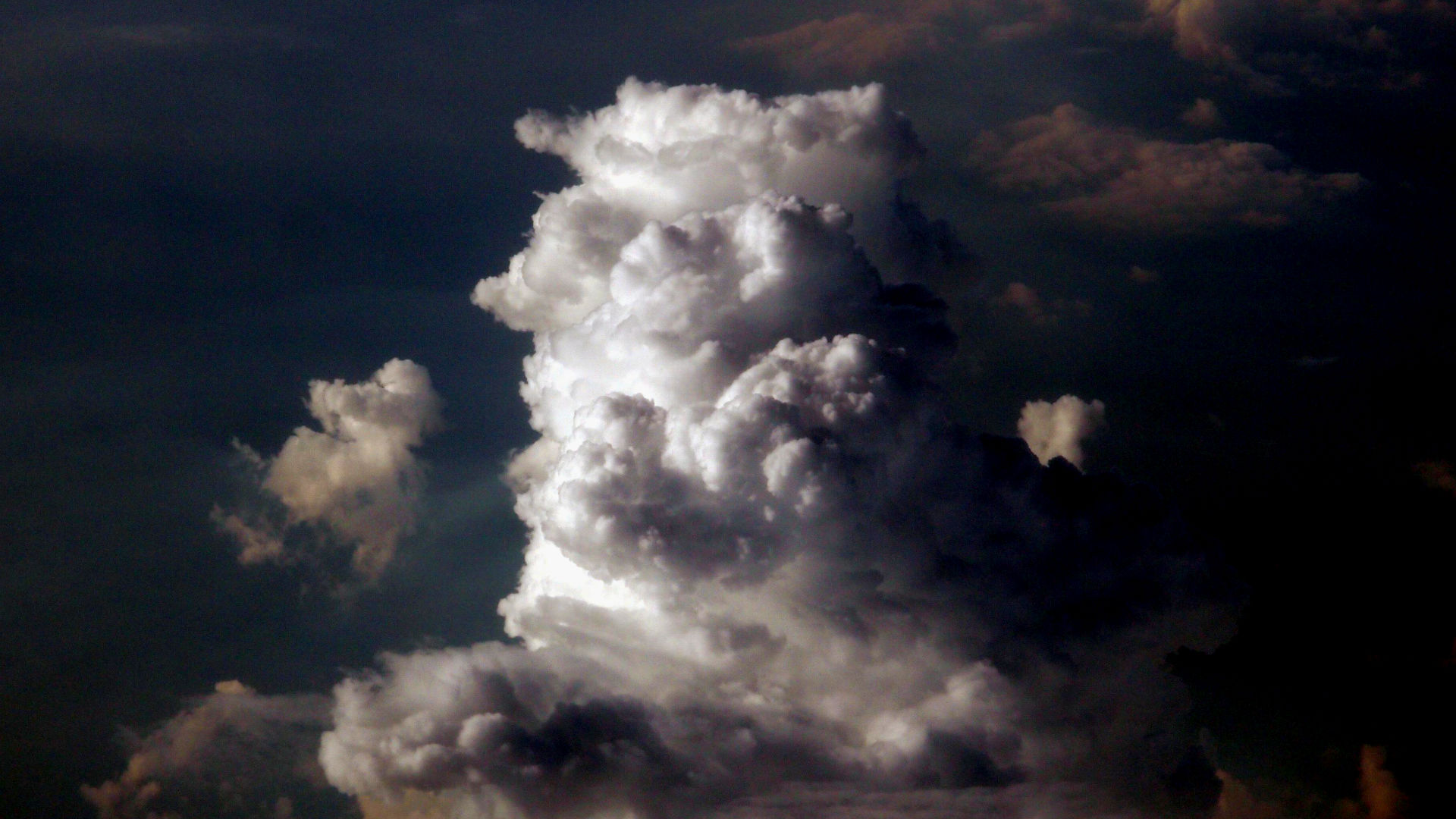
Kathryn Bigelow’s latest film, A House Built On Dynamite, opens with the kind of dread that has long haunted American imagination: a nuclear missile, origin unknown, tearing toward the United States. No one can stop it. Not even the country’s own Ground-Based Interceptor missiles, whose accuracy is as disputed as the geopolitics they symbolize. The final image lingers like radiation. A lone soldier – isolated, far from home – kneels in the dust after launching the failed interceptors, his body convulsing as he tries to comprehend the devastation about to unfold. It’s a portrait of helplessness, not heroism. #doom, #fiction
In the real world, as of 30 October 2025, President Donald Trump has instructed his Department of War to resume nuclear testing again. His own Energy Secretary contradicts him, but the message is already out there. If testing resumes, others will follow. Suddenly, Bigelow’s film, divisive as it is, feels less like fiction and more like forewarning.
The Culture Of Tech Power
At the same time, A House Built On Dynamite, shows us the true nature of the multipolar world we are living in today – its fragmentation, opacity, and unyielding systemic culture that hinders authentic solutions in real-time existential crises, of which we are facing many today, such as wars, genocides, climate collapse, and of course, nuclear anxiety. Ever accelerating technological dominance has mostly served to exacerbate the cracks in our multipolarity, wielding algorithmic opacity enforced by PR spin, emboldened by leadership powered by shamelessness.#algorithm, #opacity
Last fall, veteran American tech journalist Casey Newton discussed his viral interview with online gaming platform Roblox CEO David Baszucki, who expressed “frustration and annoyance at being asked about the company’s history of failures related to child safety.” It is worth pointing out that Roblox, unlike most social platforms, explicitly attracts users as young as 5 years old. Newton noted the most appalling aspect of the interview was the startling familiarity of the tech CEO’s “dismissive attitude” and his insistence that the platform’s problems are smaller than the reporter made it out to be. “Most successful tech CEOs really do think and talk this way,” stated Newton.#tech-company, #regulation, #CEO
A systemic culture of opacity tends to encourage shamelessness guised as bold and pioneering leadership. This is obvious in the highly unregulated tech industry where the drive for innovation and wealth outpaces regulation at every breakthrough. It has become such a glaring issue that the likes of American civil rights attorney Joel Wertheimer wrote a piece for Substack publication The Argument last October arguing for policymakers to treat “Big Tech like Big Tobacco”.#opacity, #regulation
The Tools of Tech Power: Sandboxes & Spin
The problem goes beyond America. Countries like United Arab Emirates (UAE), Hong Kong, and Singapore are increasingly sought as havens for technological experimentation. These countries spearhead regulatory sandboxes that test emerging technology with relaxed constraints. The UAE’s regulatory sandbox creates “agile” conditions for innovative information and communication technology services, while its RegLab aims to prototype future legislation for new technologies. Lest we forget, the necessary tool in enforcing this blend of opacity and experimentation is PR spin. PR spending for small and medium enterprises across the Middle East and North Africa (MENA) region has more than tripled since 2015, with digital marketing dominating.#regulation, #public relations
Generative and predictive AI, the latest technological tool we are using prevalently and investing billions in but barely comprehend, is likely to become a means of ensuring future discourse is even more engineered. In the Middle East, the use of AI and advanced analytics in PR is expected to rise significantly, mirroring global patterns. The PR industry intends to tap on AI for frictionless content creation, as well as deeper access to editorial and audience appetites. Needless to say, the shift toward AI-powered spin carries its own nest of snakes – bias, lack of transparency, minimal compliance with local data protection regulations, misleading information and more.#AI, #public relations
Paradoxically, the merry mix of opacity, shameless leadership, unregulated experimentation, and PR spin thrives best in countries with stringent controls on expression, ensuring that wealthy CEOs and their private companies remain unquestioned since strategic optimism is the lingua franca. Ironically, or maybe not, this very same cocktail of murkiness makes such countries and regions ideal birthing ground for their rise as overhyped, ambitious art capitals.#CEO, #regulation
The Gulf’s Accelerated Art Capitals
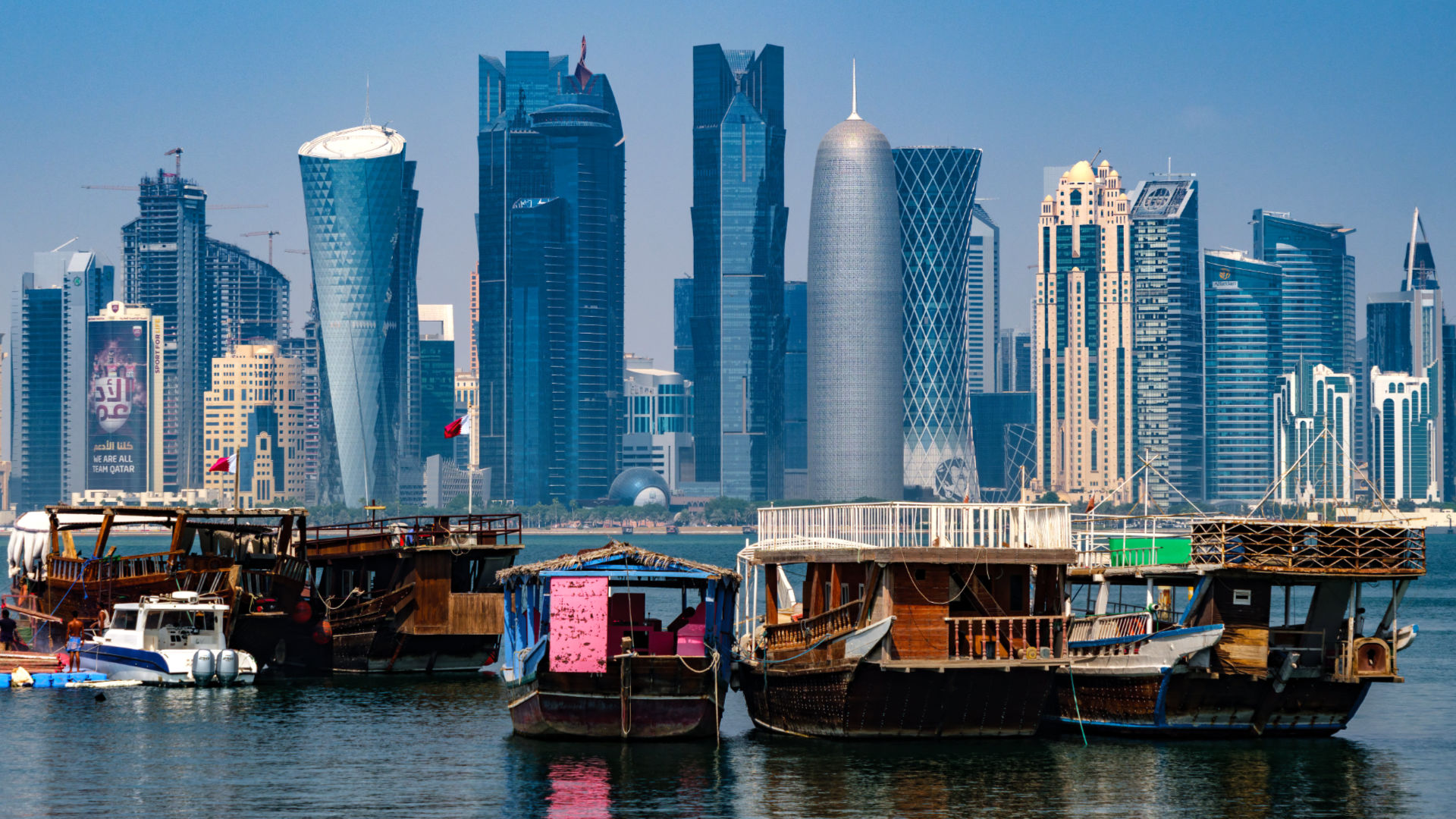
Consider the Gulf. Amidst a slew of biennales in East Asia and rising museums in Central Asia, the region is expanding its cultural profile with breathtaking speed. Anyone in the art world who has not heard of Qatar’s forthcoming mega art fair, quadrennial, interdisciplinary art week, and slew of powerhouse arts leaders, would have to be living under a rock. Even the cultural tempo of the United Arab Emirates (UAE) is quickening with Abu Dhabi leading the charge, echoing Dubai in its early ascendant years. Last December saw the launch of the inaugural Sotheby’s Abu Dhabi Collectors’ Week, followed closely by Abu Dhabi Finance Week, all unfolding in the lead up to the Emirate relaunching its mainstay fair, Abu Dhabi Art, as Frieze Abu Dhabiin 2026. MiZa – Mina Zayed, a district in Abu Dhabi, has been aggressively positioned as the Emirate’s creative crucible, hosting art, culinary, and fashion pop-ups like Prada Mode, and housing regionally renowned independent art space 421. The Natural History Museum Abu Dhabi opened at the end of November, followed by Zayed National Museum on 3 December 2025. The most highly anticipated museum to open in 2026 is the Guggenheim Abu Dhabi. While support and infrastructure bolstering creative dynamism is a welcome development in any part of the world, there are exigent concerns about this growth, specifically amidst the glaring social inequities of our time.#East Asia, #art market
Creative Labour In Crisis
Firstly, the behind-the-scenes machinations and labour that go into sustaining abovementioned ambitions, opacity, and hype in most art capitals tend to border on the pathological, given increasing social disconnect worldwide. From the US to the UAE, creative labour is in crisis, partly due to a weakening labour market and partly due to the very nature of creative labour today. Last October, American nonprofit organization Museums Moving Forward revealed 17 percent of arts workers within US museums said they were “suffering” (as opposed to “thriving” or “surviving”). This does not seem alarming, except only 4 percent of the national average express similar sentiments in a Gallup poll.#creative labour
Burnout coupled with an overwhelming pressure to ensure a dynamic arts organisation or art scene, foster an atmosphere of hyper competitiveness that permeate almost every established and rising art capital today. Moreover, crony capitalism, long associated with the Middle East and fast becoming a globally accepted wielding of power and wealth, has always had a dominant influence in the art world. Side effects include hyper competitiveness, which lead to alienation, high organisational turnover, and constant antipathy of viewing industry peers as a threat to one’s livelihood; doing little to abate the growing crisis of loneliness and declining mental health worldwide.#capitalism
Art, Tech, And The Loneliness Economy
According to the Financial Times, survey findings across US, UK, and Europe in January 2025, revealed a substantial “decline in young people’s wellbeing” largely because of a “marked shift away from in-person socialising.” Needless to say, technology is a major factor in engendering social disconnect and its titans have serious plans to profit from the “loneliness economy”, with the help of AI. All while alienated young men, from South Korea to Singapore, lose themselves to the violent social malaise of “internet-bred incel” and, young people increasingly value viral moments and algorithmic opportunity over endless institutional and career instability.#incel, #loneliness
Typically art, art spaces, and art communities provide space to process a struggling emotional psyche or fraying social fabric. Yet, where is that space when every other art scene is an overambitious, hypercompetitive art capital? Even if the artworks in museums or galleries speak to these issues of our time, is there real space in today’s burgeoning art ecosystems to discuss such issues openly? If art and tech industries make merry bedfellows due to their unique blend of opacity, PR spin, and lack of accountability, hypercompetitive art capitals make ideal breeding grounds for today’s technologically fermented loneliness and antipathy.#art scene, #capitalism
Western Bias and ‘Artwashing‘
Another crucial factor of concern is that in cities across Asia and the Middle East, long overlooked culturally by an imperial eye only cognizant of resources to tap and geopolitics to manoeuvre, building a dynamic art scene always involves intense bias for the west. This happens despite decades of visible evidence of homegrown and diasporic cultural dynamism in diverse parts of Asia, Africa, the Middle East and Latin America. In the Middle East, where expatriates from all over the world play a major role in the creative sector, pay disparity issues between Western and Non-Western expats have been reported since 2012.#artwashing, #post-imperial
Over the past decade, Gulf countries have made major investments and engaged intensely with multinational companies, institutions, and individuals, from mega museums to mega art fairs to star curators, all with Western credentials. The most recent, highly publicised, controversial example of such engagement is last year’s Riyadh Comedy Festival inviting a slew of high profile American comedians including Aziz Ansari, Bill Burr, and Jimmy Carr. Accusations of “artwashing” have long followed Gulf countries like Saudi Arabia, due to their tragic history of human rights abuses. While necessary, it also narrows the discourse on the fallacies of overambitious, aspiring art capitals.#East Asia, #artwashing
A Prophecy of the Multipolar Future
For a deeper glimpse of what lies ahead for the Gulf, one need only look towards another financialized creative capital – Singapore. In the months leading up to the inaugural ART SG fair in January 2023, the city experienced a buoyancy – gallery expansions, rising international coverage, and the relaunch of a major local auction by the global player Sotheby’s. The pandemic postponing the fair led to its very first edition benefitting from post-lockdown wanderlust and Hong Kong’s prolonged closures. Fast-forward to 2025. ART SG, an art fair launched by an international mega art fair company that also runs major art fairs, Taipei Dangdai and Tokyo Gendai, is stable enough to take over a smaller homegrown fair, S.E.A Focus. Meanwhile, Singapore has lost two major independent spaces, The Projector and The Substation, while mid-size galleries quietly close or shrink. Also, experimental contemporary art centre NTU CCA, part of a major university in Singapore, scaled down its facilities in 2020 and saw the departure of its director, leading international curator Ute Meta Bauer, in 2024. At the same time, recent editions of the initially popular Singapore Biennale have been critically derided. The DNA of the city state’s cultural ambitions is quite clear and no different from its Gulf counterparts. In fact, in 2024, Singapore government drew ire from its Southeast Asian neighbours for providing a grant to billionaire musician Taylor Swift to make the island her only regional stop in her lucrative concert tour. The optics may have been clumsy, but the motivation was clear: in a world where attention is currency, creativity is only useful when it can be wielded to algorithmic and economic advantage. #art market, #art scene, #East Asia
In other words, welcome to the multipolar world: a geopolitically fragmented, combustible world order where threats are no longer metaphorical, where opaque algorithms define your reality, actions, and choices, where crony capitalism, PR spin, and shamelessness define leadership. Most of all, art, and the creative labour behind it, exist in a hothouse of inequity and antipathy – and we dare wonder why it is the “age of average” for the arts.#multipolar
The multipolarity is essentially a house built on dynamite, with screams of erasure and loneliness reverberating through its beams that no one can hear within our algorithmically tuned feeds.#multipolar
Storytelling Beyond The Algorithm
It is all too easy to use art and artistic discourse to escape the harsh realities of this macabre landscape we currently inhabit, using the notion of a rising “dark age” in the west to overwrite the ongoing growth and struggles of the rest of the world attempting to craft its own canon. Such narratives do not meet this historical moment. They do not help us reclaim our voices, our history, our art, and our place in the fragmented world we have inherited from ancestors who struggled to ensure our very existence.#doom
In February this year, French-Moroccan multimedia artist and educator, Bouchra Khalili, will be having her first public UK solo show at the reopening of Mosaic Rooms, the cultural institution with a focus on Palestinian and Arab art, in London. Running from 18 February to 14 June 2026, ‘Circles and Storytellers’ brings together mixed media installation, The Circle (2023), and film and video work, The Public Storyteller (2024). Khalili’s seminal works are based on extensive research on the members of the Movement of Arab Workers (MTA) and its theatre groups, Al Assifa and Al Halaka. Founded in 1973 in France, the MTA and its theatre groups were pioneering autonomous organisations of Maghrebi workers fighting for equal labour and housing rights through migrants’ cultural and artistic expression. Referencing the tradition of public storytelling that is common in North Africa, theatre was central to the MTA’s activism, reflecting their understanding of community, creating common ground for Maghrebi workers and their French allies. #artistic research, #collective
The stories we seek to navigate today’s volatile terrain come from within our own diverse communities and histories. That is the core of the multipolar world, beyond its shadows and PR gloss.#multipolar